
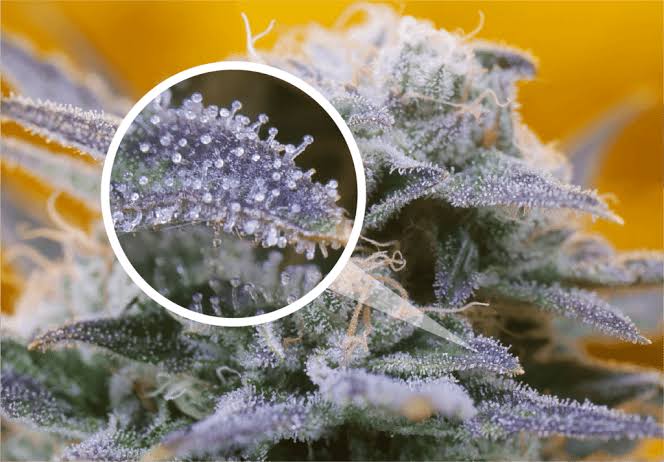
When you look closely at a high-quality cannabis flower, one of the first things you may notice is a frosty, crystal-like coating covering the surface of the bud.
Those tiny structures are called trichomes.
For cannabis consumers, trichomes are one of the most interesting parts of THC flower because glandular trichomes are closely associated with the production and storage of cannabinoids and terpenes. Research has identified the glandular trichomes found on cannabis flowers as important sites for cannabinoid and terpene biosynthesis.
This makes trichomes particularly relevant when you’re comparing different cannabis flowers.
However, there’s an important distinction: a flower covered in visible trichomes is not automatically better, more potent, or higher quality than another flower. Trichome appearance should be considered alongside cannabinoid information, terpene profiles, cultivation, curing, storage and available laboratory testing.
If you’re new to cannabis flower, start with our THCA for Beginners guide for a broader introduction to THCA, THC, heating and cannabis flower.
What Are Trichomes on THC Flower?
Trichomes are tiny structures that grow on the surface of the cannabis plant.
The word comes from a Greek term associated with hair-like growths, and trichomes occur across many different plant species. Cannabis contains several types, including bulbous, capitate-sessile and capitate-stalked trichomes.
The trichomes most noticeable on mature cannabis flowers are generally the larger capitate-stalked glandular trichomes.
These structures contain secretory cells involved in producing and storing compounds including cannabinoids and terpenes. They are particularly concentrated around the bracts and flowers of female cannabis plants.
This is why a mature THC flower can have a sticky, resinous or frosted appearance.
In simple terms:
Trichomes are tiny resin-producing structures on cannabis flowers that are closely associated with cannabinoids, terpenes and other plant compounds.
Why Are Trichomes Important in THC Flower?
Trichomes matter because they are closely connected to the chemistry that makes different cannabis flowers distinctive.
Research indicates that glandular trichomes are major sites for the biosynthesis and storage of cannabinoids and terpenoids in cannabis.
This means trichomes are associated with several characteristics consumers care about when comparing flower:
- Cannabinoid content
- Terpene production
- Aroma
- Resin production
- Flower appearance
- Overall cultivar characteristics
However, it’s important not to turn this into a simple “more trichomes = better flower” rule.
A cannabis flower’s overall characteristics depend on much more than what can be seen under the naked eye.
THC Flower Trichomes ;How They Look Like.
Under normal lighting, trichomes can make THC flower appear:
- Frosty
- Sparkly
- Crystalline
- Sticky
- Shiny
- Resin-covered
The effect is sometimes described as “frosty” flower.
If you use a magnifying glass or macro camera, individual trichomes become much easier to see.
A mature glandular trichome can resemble a tiny mushroom, with a stalk supporting a rounded glandular head.
The capitate-stalked variety can reach a size that makes it visible without specialist laboratory equipment, although magnification provides a much clearer view.
The 3 Main Types of THC Flower Trichomes
Cannabis contains different trichome structures. The three commonly discussed types are:
1. Bulbous Trichomes
Bulbous trichomes are extremely small structures found across the plant.
They are generally much smaller than the prominent glandular trichomes that create the familiar frosty appearance of cannabis flowers.
Because of their size, they are difficult to see without magnification.
2. Capitate-Sessile Trichomes
Capitate-sessile trichomes are larger than bulbous trichomes but generally smaller and less visually prominent than capitate-stalked trichomes.
They can occur on different parts of the cannabis plant, including areas around the flower and sugar leaves.
3. Capitate-Stalked Trichomes
These are the trichomes most consumers are likely to associate with the classic frosty cannabis bud.
They consist of a stalk and glandular head containing secretory cells involved in cannabinoid and terpene production and storage. Research identifies these trichomes as particularly important on cannabis flowers.
Their abundance and visible resin are major reasons some cannabis flowers have a heavily crystalline appearance.
What Are Trichome Heads?
The rounded part at the top of a glandular trichome is commonly called the trichome head.
This area contains secretory structures where important cannabis metabolites are produced and stored.
Scientific research has found cannabinoids and terpenes associated with the resin within glandular trichomes.
For consumers, the practical takeaway is simple:
The visible resin on cannabis flower is closely connected to the plant’s cannabinoid and terpene chemistry.
That is one reason trichomes are such an important feature when discussing cannabis flower quality.
What Is the Difference Between Clear, Cloudy and Amber Trichomes?
You may see cannabis guides describing trichomes as:
- Clear
- Cloudy or milky
- Amber
These descriptions refer primarily to the visual appearance of trichome heads under magnification.
However, consumers should be careful about treating trichome colour as an exact indicator of potency, maturity or expected effects.
Trichome appearance can change during flower development and post-harvest processes, but colour alone cannot tell you the complete cannabinoid or terpene profile of a product.
If you’re comparing THC flower, laboratory cannabinoid information provides a more useful source of product-specific information than attempting to estimate cannabinoid content from trichome colour alone.
Does More THC Flower Trichomes Mean Higher Potency?
Not necessarily.
This is one of the biggest misconceptions surrounding cannabis trichomes.
A flower with an extremely frosty appearance may contain substantial resin, but visual trichome coverage does not provide a laboratory measurement of THC or THCA content.
Cannabinoid concentrations are influenced by genetics, plant development, cultivation conditions, harvest timing, processing and storage.
Research also shows that cannabis trichomes contain a complex mixture of cannabinoids and terpenoids rather than simply “THC.”
Therefore:
Visible frost ≠ guaranteed potency.
When available, check the product’s cannabinoid information and laboratory documentation rather than judging potency exclusively from appearance.
Do Trichomes Contain THC?
Trichomes are major sites associated with cannabinoid biosynthesis in cannabis.
However, freshly produced cannabis flowers predominantly contain acidic cannabinoid forms such as THCA, rather than large quantities of neutral THC. THCA can convert to THC through decarboxylation involving heat.
This distinction is particularly important when you’re reading THC flower labels or laboratory reports.
For a deeper explanation, see our THCA for Beginners guide, which explains the relationship between THCA and THC and how heating changes the cannabinoid profile.
Trichomes and Terpenes
Trichomes are also closely associated with the production and storage of terpenes.
Terpenes are aromatic compounds that contribute to the characteristic smell and flavour profiles associated with different cannabis cultivars.
Depending on the cultivar, cannabis flower can have aromas described as:
- Citrus
- Fruit
- Berry
- Pine
- Earth
- Floral
- Herbal
- Spicy
Scientific studies have identified terpene biosynthesis within cannabis glandular trichomes and have shown that terpene profiles can differ between cultivars.
This is why two cannabis flowers can have very different aromas even when both have significant visible trichome coverage.
Trichomes + Terpenes + Cannabinoids
When evaluating THC flower, it is better to think about the complete profile rather than one visual characteristic.
Trichomes → resin production
Cannabinoids → chemical profile
Terpenes → aroma and flavour profile
Together, these characteristics provide a much more useful picture of a cannabis flower.
How to Look at Trichomes on THC Flower
You don’t need laboratory equipment to get a closer look at cannabis trichomes.
A basic magnifying glass or macro camera can make them easier to see.
When examining flower, look at several areas rather than focusing on a single spot.
Look for:
1. Resin coverage
Are trichomes distributed across the flower?
2. Trichome structure
Under magnification, do you see individual glandular structures?
3. Flower condition
Does the flower appear appropriately dried and stored?
4. Aroma
Does the flower have a noticeable cultivar-specific aroma?
5. Product information
Is cannabinoid and terpene information available?
The goal is not to find the “frostiest” flower possible.
Instead, use visual inspection as one part of a broader product evaluation.
What Do Healthy-Looking Trichomes Look Like?
A properly presented cannabis flower can have visible, intact trichomes covering the bracts and surrounding flower material.
The exact appearance varies by cultivar.
Some flowers naturally look extremely frosty, while others may have less obvious visible resin despite having a substantial cannabinoid and terpene profile.
This is why comparing different cultivars solely by visual frost can produce misleading conclusions.
For shoppers, the most useful approach is to combine:
- Flower appearance
- Aroma
- Cultivar information
- Cannabinoid content
- Terpene information
- Laboratory documentation
- Packaging and storage information
What Can Damage Cannabis Trichomes?
Trichomes are delicate structures.
Excessive handling can physically disturb resin glands, while unsuitable storage conditions can affect the flower’s overall quality over time.
Common factors worth paying attention to include:
Excessive Handling
Repeatedly squeezing or handling flower can disturb delicate resin structures.
Heat
High temperatures can negatively affect cannabis flower chemistry and product stability.
Light
Prolonged exposure to light can contribute to cannabinoid degradation.
Air Exposure
Poorly sealed packaging can expose flower to oxygen and environmental conditions.
Excess Moisture
Improper moisture conditions can negatively affect stored cannabis flower.
For consumers, proper packaging and storage are therefore important considerations beyond simply how frosty a flower looks.
How Trichomes Affect the Appearance of THC Flower
Trichomes are one of the main reasons cannabis flower can appear almost sugar-coated.
When large numbers of glandular trichomes cover the bracts and surrounding flower material, they reflect light and create the familiar frosted appearance.
This is particularly noticeable on cultivars with dense resin coverage.
However, appearance is not a laboratory test.
A visually impressive flower should still be evaluated using the available product information.
Trichomes vs Pistils: What’s the Difference?
Trichomes and pistils are often confused because both can be seen on cannabis flowers.
They are completely different structures.
Trichomes
Trichomes are tiny resin-producing structures associated with cannabinoids and terpenes.
Pistils / Stigmas
The colourful hair-like structures commonly seen protruding from cannabis buds are stigmas, which are part of the flower’s reproductive structure.
In other words:
White/orange/red hairs = stigmas
Frosty crystalline structures = trichomes
For more information about the different parts of cannabis flower, this distinction fits naturally with a broader Cannabis Flower Anatomy guide in your SluggersVape content cluster.
How to Judge THC Flower Trichomes Beyond
Trichome coverage is useful, but it should never be the only factor you consider.
1. Check the Cannabinoid Profile
Look for clearly presented cannabinoid information.
Depending on the product, this may include THCA, THC, CBD or other cannabinoids.
2. Look at the Terpene Profile
Terpene information can help you understand the aromatic profile associated with a particular cultivar.
3. Review Laboratory Information
Where available, laboratory documentation can provide more objective information about cannabinoid content and testing.
4. Examine the Flower
Look at:
- Trichome coverage
- Trim
- Colour
- Structure
- Aroma
- Overall condition
5. Consider Storage
Even well-produced flower can be affected by poor storage.
This makes packaging and handling important parts of the purchasing decision.
Why Trichomes Matter When Choosing THC Flower
If you’re shopping for THC flower, understanding trichomes can help you make more informed comparisons.
A heavily frosted flower can be visually appealing because the resin-producing glands are easy to see.
But the best approach is to look beyond the surface.
Use trichomes as one visual indicator, not a guarantee of quality.
A more complete evaluation considers:
Appearance + cannabinoid profile + terpene profile + testing + storage + product information
That approach is much more useful than simply choosing the flower with the most visible frost.
THC Flower Trichomes FAQs
What are trichomes on THC flower?
Trichomes are tiny structures found on cannabis plants. Glandular trichomes on cannabis flowers are important sites associated with the production and storage of cannabinoids and terpenes.
What do trichomes look like?
They often appear as tiny, crystal-like or frosty structures covering the surface of cannabis flower. Under magnification, larger capitate-stalked trichomes can resemble small mushroom-shaped structures.
Do more trichomes mean stronger THC flower?
Not automatically. Visible trichome coverage does not provide a laboratory measurement of THC or THCA content.
Are trichomes responsible for the smell of cannabis?
Trichomes are closely involved in the production and storage of terpenes, which contribute significantly to cannabis aroma.
What are cloudy trichomes?
“Cloudy” or “milky” is a visual description commonly used for trichome heads viewed under magnification. It should not be treated as a precise measurement of cannabinoid potency.
What are amber trichomes?
Amber describes a darker, amber-coloured appearance of some trichome heads under magnification. Colour can change during flower development, but it should not be used alone to determine the complete chemical profile of a product.
Can you see trichomes without a microscope?
Some larger capitate-stalked trichomes are visible to the naked eye, particularly when they are abundant. Magnification makes individual structures much easier to examine.
Final Thoughts on THC Flower Trichomes
THC flower trichomes are much more than the crystals that make cannabis buds look frosty.
These microscopic structures are closely associated with the production and storage of cannabinoids and terpenes, making them an important part of cannabis flower biology.
For consumers, however, visible trichomes should be treated as one part of the evaluation process.
When comparing THC flower, consider the complete picture:
- Trichome coverage
- Flower appearance
- Cannabinoid content
- Terpene profile
- Available laboratory information
- Cultivar information
- Storage and packaging
If you’re still learning about cannabis flower and cannabinoids, continue with our THCA for Beginners guide.
When you’re ready to explore the products available from Sluggers Vape, visit our Shop and review the available product information before making a purchase.
For U.S. consumers, always check the laws and regulations that apply in your state before purchasing or possessing cannabis products.