
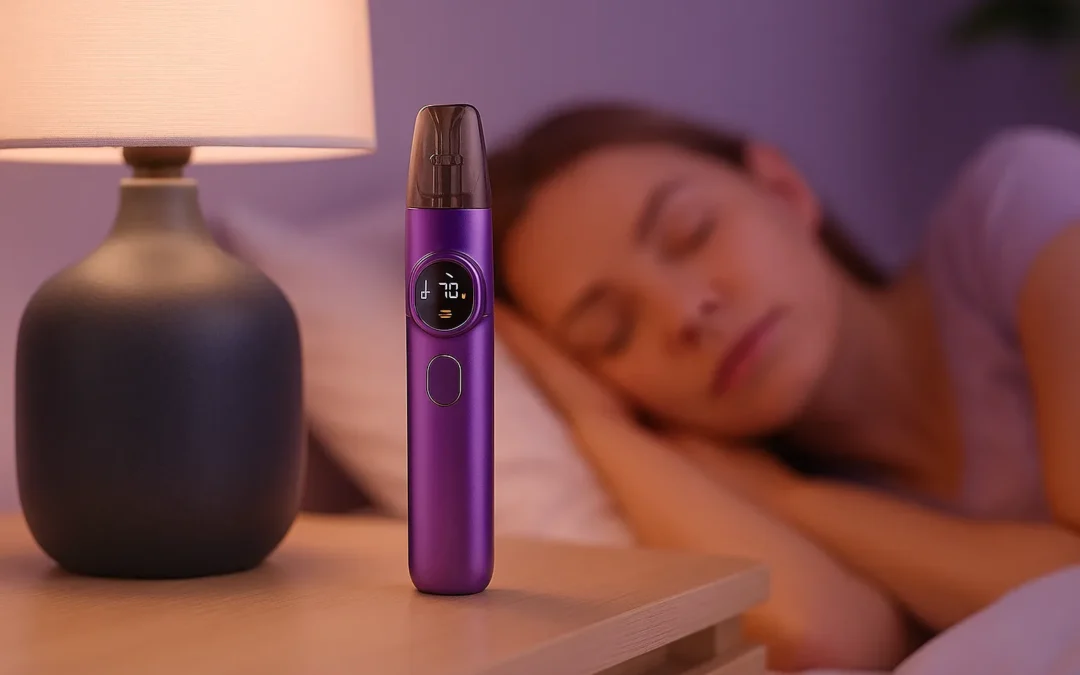
Searching for the best THC vape for sleep in the US usually means looking for a product with a relaxing profile, familiar cannabis genetics, suitable potency and reliable product information.
But choosing a THC vape based on the word “sleep” alone can be misleading. Cannabis products can affect people differently, and current research has not established THC vapes as a proven treatment for sleep disorders. The National Center for Complementary and Integrative Health notes that some studies have reported improvements in sleep-related measures among people using cannabis or cannabinoids, but it remains uncertain whether those effects are directly caused by the cannabinoids or improvements in other symptoms.
For consumers comparing products, a better approach is to look at cannabinoid content, indica or hybrid classification, terpene profile, potency, hardware and laboratory testing.
This 2026 Sluggers Vapes guide explains what to look for when evaluating THC vapes marketed or searched for as nighttime options.
What Is the Best THC Vape for Sleep?
There is no single THC vape that can be objectively described as the best for everyone.
Instead, consumers commonly compare products according to characteristics such as:
- Indica or indica-dominant profiles
- THC potency
- Cannabinoid composition
- Terpene profile
- Distillate versus live resin
- Product consistency
- Hardware quality
- Batch-specific laboratory testing
- Ingredient transparency
These factors provide a more useful framework than choosing a product simply because its name contains words such as “sleep,” “nighttime” or “relax.”
If you’re comparing products from different brands, the same approach can help you separate a well-documented vape from one with limited product information. Browse our THC Vapes: The Complete Beginner’s Guide
Indica vs Hybrid: What Should You Look For?
One of the most common questions is whether an indica THC vape is preferable for nighttime use.
Cannabis products are often described using categories such as indica, sativa and hybrid. These labels can provide useful context about a product’s reported lineage, but they should not be treated as a guarantee of a particular effect.
An indica-dominant product may appeal to consumers looking for a more traditional nighttime cannabis profile.
However, the actual cannabinoid and terpene composition can vary considerably between products carrying the same broad classification.
That’s why it is useful to consider the complete product profile rather than the indica label alone.
For a deeper explanation, see our guide to Indica vs Sativa vs Hybrid.
THC Potency: Is Higher THC Better?
Higher THC does not automatically mean a better nighttime vape.
Potency is one of the most important specifications to check when comparing THC vape products, but consumers should distinguish between THC concentration and overall product quality.
A high-potency product may contain a greater concentration of THC, while another product may have a more complex cannabinoid and terpene profile.
When comparing products, check:
- Total THC concentration
- Other cannabinoids
- Amount of oil or extract
- Product format
- Laboratory results
- Batch information
Rather than assuming that the highest THC percentage is the best choice, look for a product whose specifications are clearly documented.
For more information, read our THC Vape Potency Guide.
Why Terpenes Matter When Comparing THC Vapes
Terpenes are aromatic compounds found in cannabis and many other plants.
They contribute to a product’s aroma, flavor and overall profile.
Common cannabis terpenes include:
- Myrcene
- Limonene
- Caryophyllene
- Linalool
- Pinene
- Terpinolene
Consumers researching nighttime-oriented cannabis products may pay particular attention to terpene profiles associated with indica-dominant cultivars.
However, terpene presence should not be presented as proof that a vape will make someone sleep or treat insomnia.
Instead, think of terpenes as one part of the product’s sensory and chemical profile.
For a deeper look at this subject, see our Cannabis Terpenes Explained guide.
Distillate vs Live Resin for Nighttime Vaping
Another important comparison is the type of extract used inside a vape.
THC Distillate
Distillate is highly refined cannabis oil that can contain a high concentration of THC.
Because much of the original plant material is removed during refinement, manufacturers may add or reintroduce terpenes to create a particular flavor or profile.
Live Resin
Live resin is produced from cannabis that is typically processed soon after harvesting, with the goal of preserving more of the plant’s naturally occurring compounds.
This can result in a more complex terpene profile than a highly refined distillate product.
Neither format should automatically be considered “better for sleep.”
Instead, consumers can compare extract type, cannabinoid profile, terpene information and laboratory documentation.
Read our Live Resin vs Distillate Guide for a more detailed comparison.
What Makes a THC Vape High Quality?
When searching for a premium THC vape, quality should extend beyond potency.
A well-documented product should provide information that allows consumers to understand what they are purchasing.
1. Clear Cannabinoid Information
Look for clearly stated cannabinoid content rather than vague descriptions.
2. Batch-Specific Testing
A batch number can connect the product to laboratory documentation.
3. Certificate of Analysis
A Certificate of Analysis (COA) can provide information about the tested batch.
Depending on the laboratory panel, testing may include cannabinoids and contaminants such as pesticides, heavy metals or residual solvents.
4. Transparent Ingredients
Vape products should provide clear ingredient information where applicable.
5. Consistent Hardware
The device should be designed appropriately for the oil it contains, with reliable airflow and charging or activation components where applicable.
6. Product Traceability
Brand, batch and laboratory information make it easier to understand where a product came from and what was tested.
For more information, read our guide on How to Read a THC Vape COA.
THC Vape Hardware Matters Too
The oil is not the only part of a vape worth evaluating.
Hardware can affect the overall experience of using a disposable or cartridge.
Useful specifications to consider include:
- Device capacity
- Battery type
- Heating element
- Airflow design
- Activation method
- Oil visibility
- Charging capability
- Hardware consistency
A well-formulated oil can still provide a poor user experience if the hardware has inconsistent airflow, leakage or poor heating performance.
For consumers comparing formats, our THC Disposable vs Cartridge Guide explains the main differences.
Disposable vs Cartridge for Nighttime Use
THC vapes generally fall into two broad categories: disposables and cartridges.
THC Disposable
A disposable combines the cannabis oil and battery into one device.
This can make the format convenient because there is no separate battery to purchase.
THC Cartridge
A cartridge contains the cannabis oil in a replaceable cartridge that requires a compatible battery.
The advantage is that the battery can potentially be reused with other compatible cartridges.
Neither format is inherently a better nighttime option. The more important considerations are oil composition, testing, hardware quality and product transparency.
How to Compare THC Vapes for Nighttime Use
If you are comparing several products, use a simple checklist.
| Factor | What to Look For |
|---|---|
| Cannabis profile | Indica, hybrid or specific strain/lineage information |
| THC potency | Clearly stated cannabinoid concentration |
| Terpenes | Transparent terpene information |
| Extract | Distillate, live resin or other clearly identified extract |
| COA | Recent, batch-specific laboratory documentation |
| Ingredients | Clearly disclosed formulation |
| Hardware | Reliable and appropriate for the oil |
| Brand information | Clear manufacturer/product information |
| Product consistency | Consistent labeling and batch information |
This approach is more useful than selecting a product based solely on a “sleep” label.
Why Lab Testing Matters
Laboratory testing is particularly important when comparing THC vape products.
The FDA notes that there are still significant unanswered questions around the science, safety and quality of cannabis-derived products, while the agency has not approved cannabis products generally available on the market as treatments for sleep.
A COA can help consumers evaluate what a particular batch was tested for.
Depending on the test, documentation may include:
- THC
- CBD
- Other cannabinoids
- Terpenes
- Pesticides
- Heavy metals
- Residual solvents
- Microbial contaminants
A COA does not guarantee that a product will produce a particular effect, but it can provide useful information about composition and testing.
Should You Choose an Indica THC Vape?
Indica may be an important search filter for consumers looking for a traditional nighttime cannabis profile.
However, indica alone should not determine your choice.
A better evaluation combines:
Indica or hybrid classification + cannabinoid profile + terpene information + extract type + potency + COA + product quality.
This gives you a much clearer picture of the product than the indica label by itself.
THC Vapes and Sleep: What Does the Research Say?
This is an area where cannabis marketing can easily go too far.
Some research has reported improvements in sleep quality or reduced sleep disturbances among people using cannabis or cannabinoids. However, NCCIH notes that it can be difficult to determine whether cannabis directly improved sleep or whether people slept better because another health problem improved.
NCCIH also reports that evidence has been insufficient to support cannabinoid therapies as established treatments for sleep disorders.
Therefore, a responsible THC vape guide should avoid claims such as:
- “Cures insomnia”
- “Guaranteed sleep”
- “Best treatment for sleep”
- “Clinically proven to make you sleep”
- “Works for everyone”
Instead, consumers should treat “THC vape for sleep” as a product-research category and evaluate the actual specifications.
U.S. Legal Considerations
THC laws in the United States vary significantly by state, and federal and state rules can differ.
Before purchasing or possessing a THC vape, consumers should check the laws that apply where they live.
The legal status of a product can depend on factors including:
- THC content
- Source of cannabinoids
- Product formulation
- State law
- Federal law
- Intended use
- Where the product is sold or possessed
Do not assume that a product advertised online is automatically legal in every U.S. state.
For a broader overview, read our US Cannabis Laws 2026: Federal & State Marijuana Laws Explained.
Best THC Vape for Sleep US 2026: What Should You Prioritize?
If you’re comparing THC vapes for nighttime use, prioritize product transparency over marketing claims.
A strong product profile should provide:
- Clearly identified cannabinoid content
- Transparent potency information
- A disclosed terpene profile where available
- Clearly identified extract type
- Batch-specific COA information
- Transparent ingredients
- Reliable hardware
- Clear brand and product information
- Appropriate legal availability in your state
An indica-dominant profile may be relevant to your search, but it should be considered alongside the rest of the product information.
Frequently Asked Questions
What is the best THC vape for sleep?
There is no universally established “best” THC vape for sleep. Consumers comparing nighttime-oriented products should examine cannabinoid content, potency, terpene profile, extract type, COA information and overall product quality.
Are indica THC vapes better for nighttime use?
Indica-dominant products are commonly associated with nighttime-oriented cannabis profiles, but the indica label does not guarantee a particular effect. Product composition and individual response can vary.
Does higher THC mean a better THC vape?
No. Higher THC concentration does not automatically mean better quality or a better nighttime experience. Potency should be considered alongside cannabinoids, terpenes, extraction method and laboratory testing.
What terpenes should I look for in a nighttime THC vape?
Consumers often research terpenes such as myrcene, linalool and caryophyllene when comparing cannabis profiles. However, terpene presence should not be treated as proof that a product will improve sleep.
Should I choose live resin or distillate?
That depends on what you’re looking for. Distillate generally emphasizes refined THC concentration, while live resin can provide a more complex terpene profile. Compare the actual cannabinoid, terpene and laboratory information rather than assuming one is universally better.
Why is a COA important?
A Certificate of Analysis provides laboratory information about a particular batch. Depending on the testing panel, it can help verify cannabinoid content and identify testing for contaminants.
Are THC vapes FDA-approved sleep treatments?
No. The FDA states that it has not approved cannabis products generally available on the market as treatments for sleep.
Final Takeaway
The best way to evaluate a THC vape for sleep in the US in 2026 is to look beyond the word “sleep” on the label.
Consider the complete product profile:
Indica or hybrid classification → potency → cannabinoids → terpenes → extract type → COA → ingredients → hardware → product quality.
This approach helps you compare THC vape products based on verifiable product information rather than exaggerated promises.
For more information, explore our THC Vapes: The Complete Beginner’s Guide, THC Disposables Guide, Indica vs Sativa vs Hybrid, Live Resin vs Distillate, THC Vape COA Guide, and US Cannabis Laws 2026.