
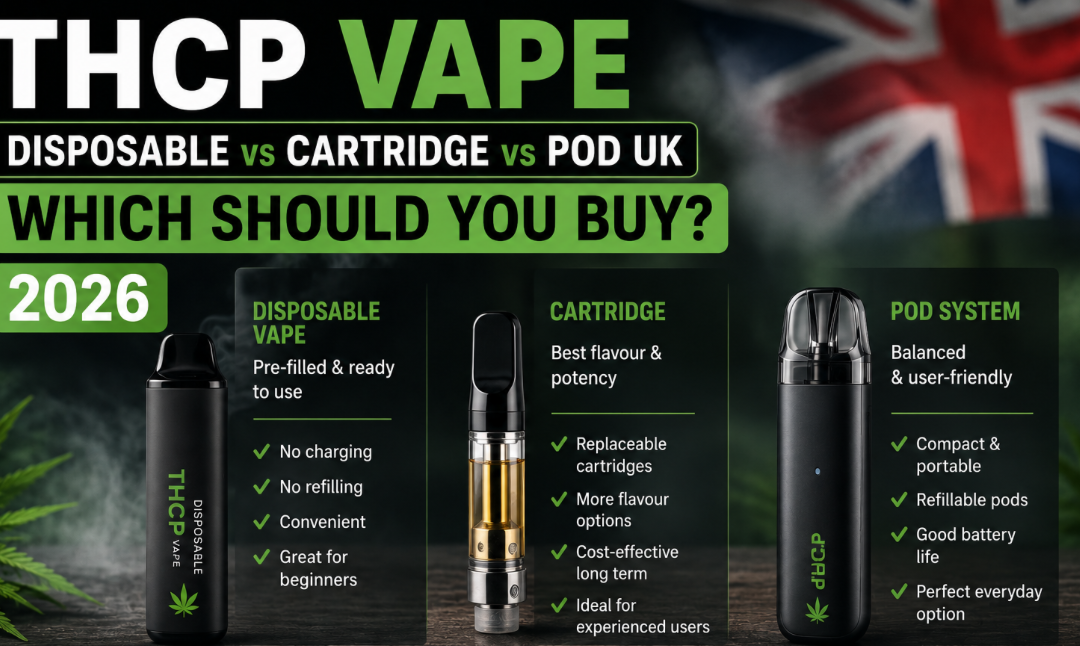
THCP disposable vapes have become an increasingly discussed category within the rapidly changing U.S. cannabinoid market.
Unlike traditional THC products, THCP products involve a newer cannabinoid that many consumers may not have encountered before. That creates important questions: What is THCP? How does a THCP disposable vape differ from a traditional THC vape? What should buyers look for in a product? And how can you evaluate cannabinoid content and laboratory testing?
This Sluggers Carts guide explains the basics of THCP disposable vapes, how THCP compares with other cannabinoids, what to look for when evaluating a product, and the key considerations U.S. buyers should understand. Browse our THC Vapes: The Complete Beginner’s Guide
Important: THCP is a relatively new cannabinoid, and research into its effects and long-term safety in humans remains limited. Product descriptions should therefore be based on documented cannabinoid content and testing rather than exaggerated potency or health claims.
What Is THCP?
THCP, short for tetrahydrocannabiphorol, is a cannabinoid that was identified and characterized in cannabis research published in 2019.
Researchers identified THCP as a naturally occurring cannabinoid with a molecular structure related to Delta-9 THC. Its structure includes a longer alkyl side chain than Delta-9 THC, which is one reason researchers have investigated its interaction with cannabinoid receptors.
THCP is now also associated with manufactured cannabinoid products, including vape formulations.
This distinction matters because the THCP found in a commercial disposable may not simply be extracted from cannabis flower. Depending on the product, THCP can be produced through processing or synthesis and then incorporated into a formulated vape product.
For buyers, the most useful starting point is therefore to look beyond the name “THCP” and examine the actual cannabinoid profile, ingredients and laboratory documentation.
What Is a THCP Disposable Vape?
A THCP disposable vape is a pre-filled, single-use vaping device containing a formulation that includes THCP.
Unlike a traditional cartridge, a disposable typically combines the:
- Vape oil or cannabinoid formulation
- Heating element
- Battery
- Mouthpiece
- Hardware
into one ready-to-use device.
Once the formulation or battery is depleted, the disposable is generally replaced rather than refilled.
The exact formulation varies between products. A THCP disposable may contain THCP alongside other cannabinoids, terpenes or formulation ingredients.
That means two products marketed as THCP disposables can have significantly different cannabinoid profiles. Learn THC Disposables: The Complete Guide
How Does a THCP Disposable Vape Work?
The basic mechanism is similar to other disposable vape devices.
A battery powers a heating element, which heats the cannabinoid formulation and produces an aerosol for inhalation.
Unlike smoking cannabis flower, vaping does not involve burning plant material.
However, vaping cannabinoid concentrates is not risk-free. The CDC notes that cannabis concentrates used in vaping can contain highly concentrated cannabinoids and may contain additives or contaminants, while the health effects of highly concentrated cannabis products are not fully understood.
This is why product documentation and ingredient transparency are important when evaluating any cannabinoid vape.
THCP vs Delta-9 THC
THCP and Delta-9 THC are different cannabinoids.
Delta-9 THC is the primary intoxicating cannabinoid traditionally associated with cannabis. THCP has a related molecular structure but differs in its side chain.
Laboratory research has shown that THCP interacts strongly with cannabinoid receptors, particularly CB1 receptors. However, receptor-binding data should not be translated directly into a claim that a particular THCP disposable will produce a specific multiple of the effects of Delta-9 THC in humans.
For consumers, the better comparison is based on:
- Actual cannabinoid concentration
- Product formulation
- Laboratory testing
- Other cannabinoids present
- Individual response
Rather than relying on a simple “stronger than THC” label.
THCP vs Delta-8 THC
THCP and Delta-8 THC are also different cannabinoids.
Delta-8 THC is another THC isomer that has become widely discussed in the U.S. hemp-derived cannabinoid market.
THCP is structurally different and has its own cannabinoid profile.
If you’re comparing the two, don’t assume that information about Delta-8 automatically applies to THCP. Their chemistry, production methods, available research and regulatory considerations are different.
For a broader comparison, see our Delta-8 vs Delta-9 THC Guide and THC Disposable Guide.
What Do THCP Disposable Vapes Feel Like?
THCP is associated with psychoactive cannabinoid activity, but there is not enough high-quality human evidence to establish a predictable experience for every consumer.
Reported experiences with cannabinoid products can vary depending on:
- Cannabinoid concentration
- Individual tolerance
- Product formulation
- Other cannabinoids
- Terpenes
- Method of consumption
- Individual factors
For this reason, buyers should be cautious about product pages or articles that promise a specific experience.
A more reliable approach is to evaluate the actual formulation and laboratory results.
What Should You Look for in a THCP Disposable Vape?
If you’re researching THCP disposable products in the U.S., several factors can help you distinguish a well-documented product from one with limited information.
1. Clear Cannabinoid Information
A product should clearly identify the cannabinoids included in its formulation.
Look for information showing whether the product contains:
- THCP
- Delta-9 THC
- Delta-8 THC
- CBD
- THCA
- Other cannabinoids
A vague description such as “premium cannabinoid blend” provides considerably less information.
2. Batch-Specific Testing
One of the most useful pieces of information is a batch number that can be connected to laboratory results.
Batch-specific testing makes it easier to determine whether the available COA corresponds to the product being evaluated.
3. A Certificate of Analysis
A Certificate of Analysis (COA) is laboratory documentation showing the results of testing performed on a particular product or batch.
Depending on the testing panel, a cannabinoid COA may provide information about:
- Cannabinoid concentrations
- THC content
- THCP content
- Other cannabinoids
- Pesticides
- Heavy metals
- Residual solvents
- Microbial contamination
The exact tests vary by laboratory.
A COA is therefore one of the most useful documents to examine when researching a cannabinoid disposable.
4. Ingredient Information
Don’t look only at the cannabinoid name.
A disposable formulation can contain other ingredients, including terpenes or carrier/formulation components.
A transparent product description should make the formulation as clear as reasonably possible.
5. Manufacturer Information
Look for identifiable manufacturer or brand information and a way to connect the product to its laboratory documentation.
This can make it easier to evaluate the provenance of a product.
How to Read a THCP Vape COA
Reading a COA doesn’t have to be complicated.
Start by checking the product name and batch number.
Then check the cannabinoid results.
For example, a laboratory report might list multiple cannabinoids rather than THCP alone.
Next, check whether additional testing was performed for contaminants.
For vape products, this can be particularly useful because inhalation introduces considerations that are different from simply evaluating cannabis flower.
Most importantly, don’t assume that the presence of a COA automatically means a product is safe, approved or legal everywhere in the United States.
Laboratory testing and regulatory status are separate questions.
For more information, read our How to Read a THC Vape COA guide.
THCP Disposable Vape Safety Considerations
THCP products are part of a relatively new cannabinoid category, meaning the scientific evidence available for human use is limited compared with established cannabinoids.
The CDC notes that cannabis products can carry health risks regardless of how they are consumed, and that concentrated cannabis products used for vaping may contain additives or contaminants.
The FDA has also previously warned consumers about THC-containing vaping products obtained from illicit or informal sources and has highlighted concerns surrounding contaminants and additives in vaping products.
For that reason, buyers should avoid treating a THCP disposable as simply another version of a conventional vape.
Product transparency, laboratory documentation and responsible use are important considerations.
Are THCP Disposable Vapes Legal in the United States?
This is one of the most important questions for U.S. buyers.
The answer is not simply yes or no nationwide.
Cannabinoid laws in the United States can involve federal rules, state legislation, product composition and how a cannabinoid is produced or marketed.
The legal status of a particular THCP product can therefore depend on the jurisdiction and the exact formulation.
The 2018 Farm Bill removed hemp from the federal Controlled Substances Act, but that does not mean every hemp-derived cannabinoid product is automatically lawful in every circumstance or every state.
State laws can impose additional restrictions.
Therefore, buyers should check the laws that apply in their state rather than relying solely on a product description saying that a THCP disposable is “legal.”
For the broader U.S. picture, see our US Cannabis Laws 2026: Federal & State Marijuana Laws Explained guide.
THCP vs THCA
THCP and THCA are completely different cannabinoids.
THCA is the acidic precursor associated with THC and can convert to THC when exposed to heat.
THCP is a separate cannabinoid with a different molecular structure.
This means information about THCA flower should not automatically be used to describe THCP products.
For more information, see our THCA for Beginners: A Complete Guide.
THCP Disposable vs THC Disposable
A conventional THC disposable and a THCP disposable may look almost identical from the outside.
The major difference is the cannabinoid formulation inside.
| Feature | THCP Disposable | THC Disposable |
|---|---|---|
| Primary cannabinoid | THCP | Usually THC |
| Product format | Disposable vape | Disposable vape |
| Psychoactive potential | Yes | Yes |
| Research base | More limited | More extensive |
| Product formulation | Can vary | Can vary |
| COA importance | High | High |
| State-law considerations | Important | Important |
The hardware itself may not tell you much about the cannabinoid inside the device.
The labelling, ingredients and COA are more useful when comparing products.
How Long Does a THCP Disposable Vape Last?
There isn’t one universal answer.
How long a disposable lasts depends on factors such as:
- Device capacity
- Amount of cannabinoid formulation
- Heating system
- Frequency of use
- Puff duration
- Device efficiency
A larger-capacity disposable may contain more formulation than a smaller device, but that doesn’t automatically translate into a specific number of days or puffs.
For this reason, avoid product descriptions that promise an exact lifespan for every consumer.
For a broader explanation, read our How Long Does a THC Vape Last? guide.
How Should THCP Disposables Be Stored?
Storage can affect the condition of cannabinoid vape products.
Keep disposable devices:
- Away from excessive heat
- Away from direct sunlight
- In a dry environment
- Away from children and pets
- In accordance with the manufacturer’s storage instructions
Extreme temperatures can affect both the formulation and the hardware.
Always follow the specific storage instructions provided with the product.
Common THCP Disposable Vape Buying Mistakes
Choosing Based Only on Potency Claims
A large number on a label doesn’t automatically tell you everything about a product.
Look at the complete cannabinoid profile and laboratory documentation.
Ignoring the COA
If laboratory information is available, examine it rather than relying solely on marketing language.
Assuming “Hemp-Derived” Means Legal Everywhere
U.S. cannabinoid laws vary by state, and product composition matters.
Assuming THCP Is Just “Stronger THC”
THCP and Delta-9 THC are different cannabinoids. Scientific receptor-binding findings should not be presented as a guaranteed human experience.
Buying From Unverified Sources
The FDA has warned consumers about THC-containing vaping products obtained from illicit or informal sources.
Product transparency and traceability are therefore important considerations. Learn How to Identify Fake THC Vapes
Frequently Asked Questions
What is a THCP disposable vape?
A THCP disposable vape is a pre-filled, single-use vaping device containing a formulation that includes THCP.
Is THCP stronger than Delta-9 THC?
THCP has demonstrated strong interaction with CB1 receptors in laboratory research, but receptor-binding results should not be treated as proof that THCP produces a specific multiple of Delta-9 THC’s effects in humans.
Does THCP get you high?
THCP is associated with psychoactive cannabinoid activity. However, individual experiences can vary, and human research remains limited.
Is THCP the same as Delta-8?
No. THCP and Delta-8 THC are different cannabinoids with different chemical structures and research profiles.
Is THCP the same as THCA?
No. THCP and THCA are different cannabinoids.
What should I look for in a THCP disposable?
Look for clear cannabinoid information, ingredient information, batch identification, laboratory testing and identifiable manufacturer information.
Are THCP disposable vapes legal in the U.S.?
The answer depends on the applicable federal and state rules, as well as the exact product formulation and circumstances. Buyers should check the current laws in their state.
Does THCP have FDA approval?
Consumers should not interpret the presence of THCP in a product as FDA approval. FDA materials describe THCP as a cannabinoid of interest and note that information about many newer cannabinoids remains limited.
Final Takeaway: What U.S. Buyers Should Know About THCP Disposables
THCP disposable vapes are part of a newer generation of cannabinoid products appearing in the U.S. market.
The most important thing for buyers is to look beyond the word “THCP.”
Evaluate the complete cannabinoid profile, ingredients, batch information and laboratory documentation. Be particularly cautious about exaggerated potency claims and assumptions that hemp-derived products are automatically legal in every state.
Because THCP is a relatively new cannabinoid with a more limited human evidence base, transparent product information is especially important.